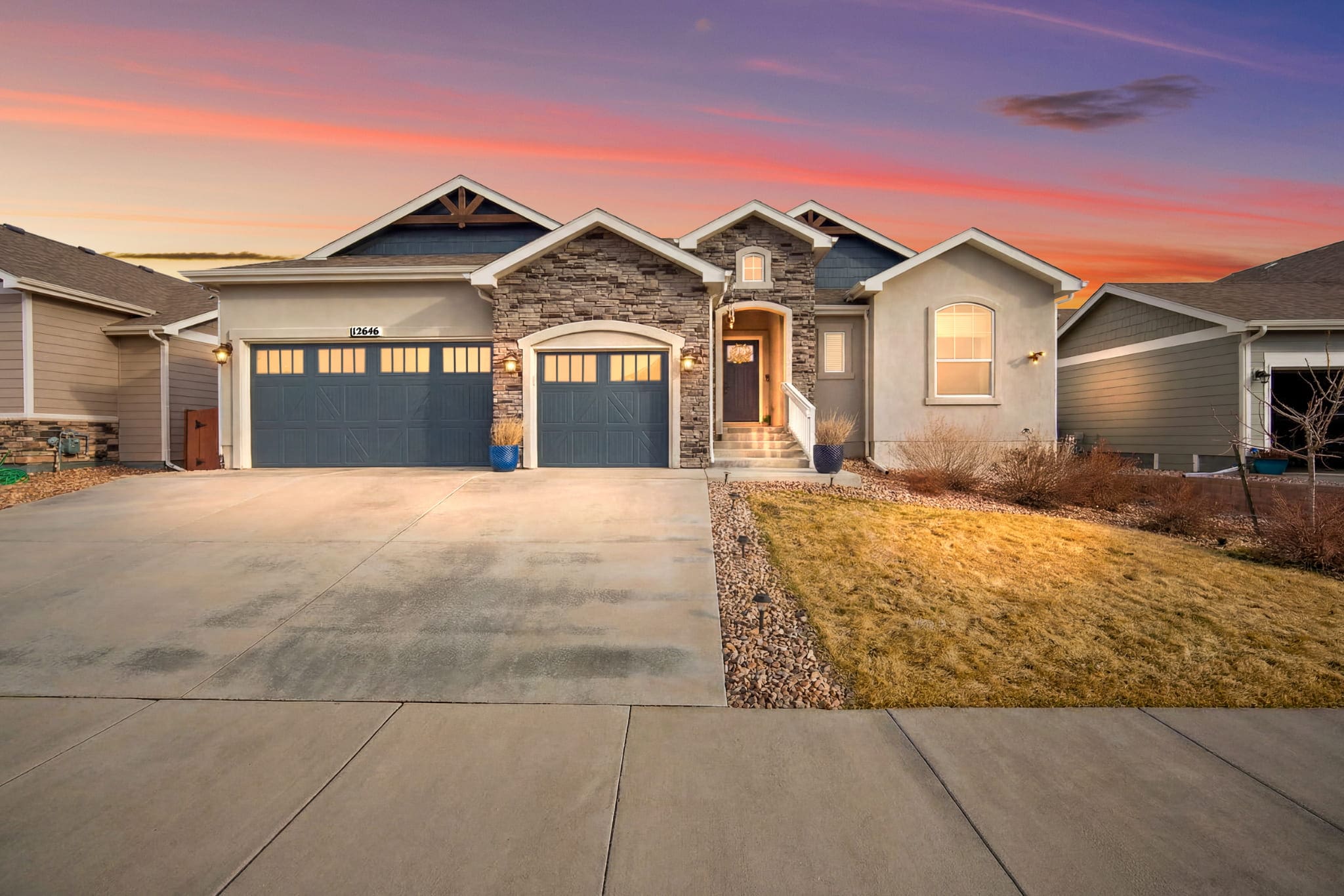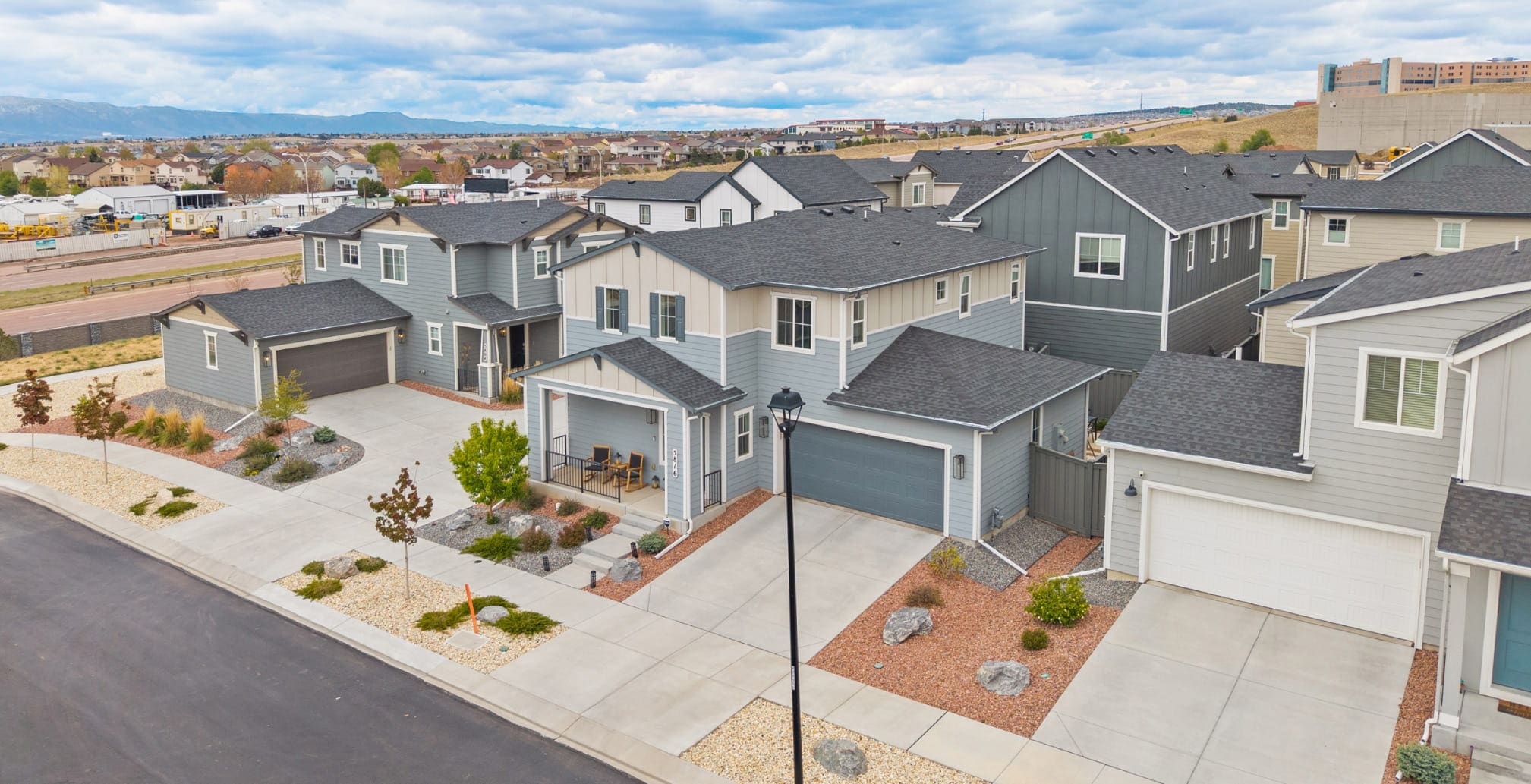



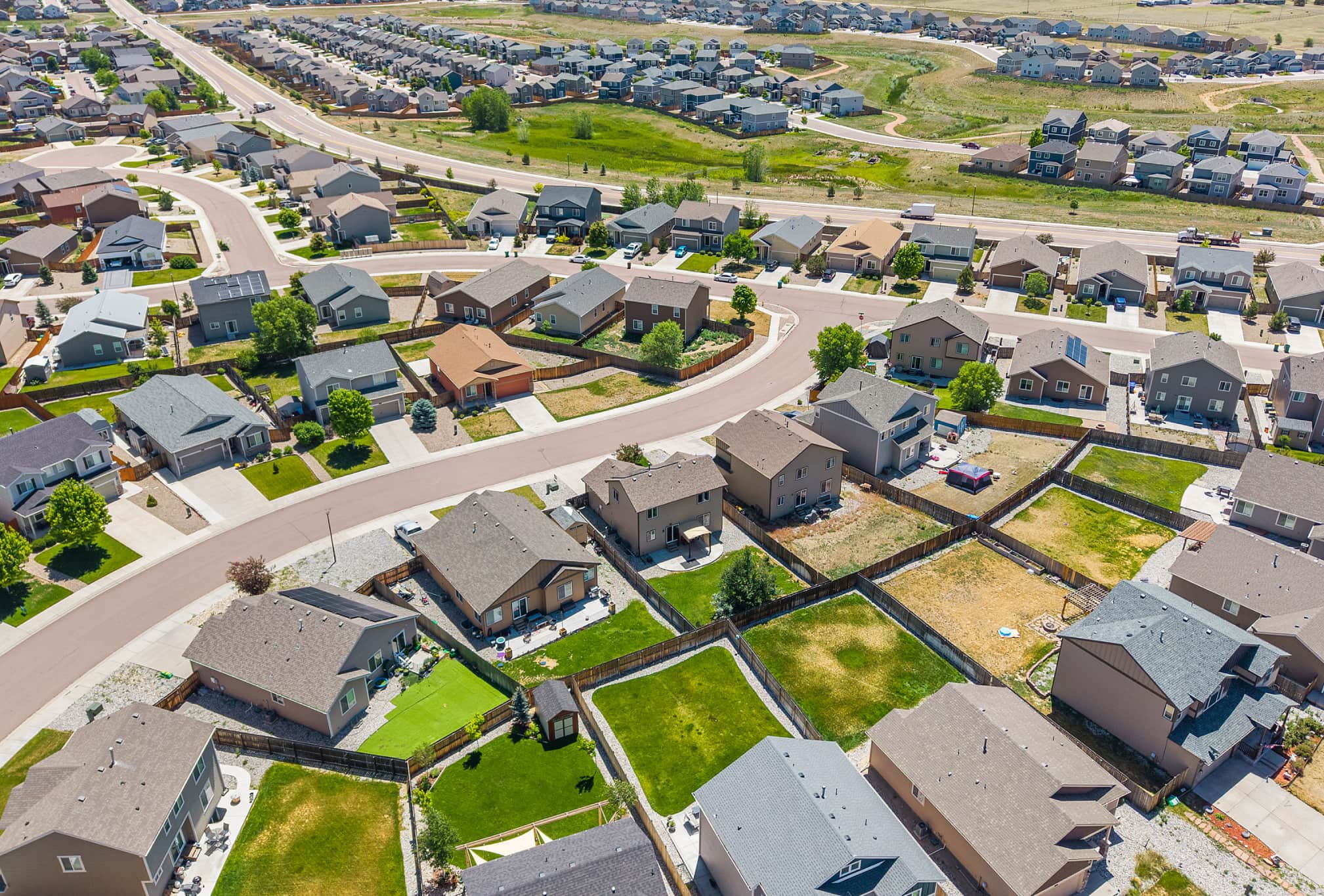
The buyers who land the home they actually want, instead of settling months later, are the ones who searched with a system: the right tools, a clear sense of what they’re looking at, and an eye trained to catch what photos hide.
Updated October 2026 · Reviewed by The Johnson Team
Colorado Springs Isn’t One Market
Colorado Springs doesn’t move as one market. It moves as a dozen of them.
A home near Fort Carson runs on a different rhythm than one in District 20, and a foothills property on the west side comes with questions a flat lot in Falcon never raises. Knowing how to read those differences, and where the real homes surface before the portals catch up, is the part of the search where a team that knows this city earns its keep.
We’ve been doing that here since 2010. This post covers both halves of the search: choosing the right area, and knowing what you’re looking at once you’re standing in a house. If your budget and financing aren’t settled yet, start with Step 1 instead.
Part One: Finding the Right Colorado Springs Neighborhood
How Do You Choose a Colorado Springs Neighborhood From Out of State?
Start with how you’ll actually live here, not with a map. The north end feels nothing like the west side, and Falcon is its own world again, and none of that shows up in a listing photo.
A lot of the people we work with aren’t from here. Some are relocating with the military, some are remote workers chasing the mountains and the space, some are following a job or family. They all hit the same wall: choose from two thousand miles away without knowing the difference between these areas, and you can end up in the right house in the wrong part of town.
It starts with a conversation. Before we send you a stack of listings, we want to understand where you’ll be working, how you like to spend a weekend, whether you need to be near a base, and what this move is supposed to give you. From there we’ll take you through the areas that fit, in person or remotely if you haven’t moved yet, and walk the trade-offs of each: the feel of the streets, the commute you’ll really have, the things you only pick up by being there. Our neighborhood guides are a reasonable place to start narrowing before that call.
Because this is home for us. We’ve been doing this here since 2010, across more than 3,600 families. Our agents don’t study these neighborhoods from a desk, we live in them, run errands in them, and know the difference a few blocks makes between one street and the next. We can tell you where the afternoon sun hits, which commute looks fine on a map and isn’t, and which pocket of a neighborhood holds steady when the rest cools off.
And we keep it current. The whole team reviews market trends together every week, so what we tell you about a neighborhood’s timing and pricing reflects real, current data, not one agent’s memory of their last few deals. The typical agent closes about ten homes a year, according to the National Association of Realtors’ 2025 Member Profile, which is enough to catch isolated moments but not real patterns. Seeing the volume we do across the city is what turns local familiarity into local authority.

Which Colorado Springs Neighborhood Is Right for You?
It depends on which of four things you’re solving for: schools, commute, land, or the age and character of the house. Those sort this city more cleanly than any map does.
The north end is where most of the newer construction sits, through Briargate, Cordera, and Flying Horse and up the corridor toward Monument, which puts it in D20 and D38 and is a large part of what draws families there. Head south and west and the character changes completely. The Broadmoor area and Cheyenne Mountain are established and wooded and sit in D12, while Old Colorado City, the Westside, and the Old North End trade newness for older homes, mature trees, and streets you can walk.
East of Powers is where much of the current construction is going up, out through Falcon, Meridian Ranch, and Banning Lewis Ranch in D49, generally on larger lots than the older parts of town. South of the city, Fountain and Security-Widefield sit closest to Fort Carson, which makes them practical for a lot of military families. And if what you want is land, Black Forest is where the acreage is, usually on well and septic rather than city utilities.
Each of those breaks down further once you’re inside it, and the area that ends up fitting is often not the one you started with.
Are You Searching Too Narrowly?
Probably. Filtering too tightly is the most common way buyers box themselves out of the home they’d have loved, and three small adjustments open most of it back up.
- Price. Look a little above and below your target. Sellers reduce, and a hard filter hides a home priced just outside it.
- Location. Stretching your map a mile or two can surface a neighborhood you didn’t know you’d love, and it doesn’t have to stop at the city line.
- Size. A two-bedroom with a finished basement can live larger than a three-bedroom with wasted space.
This is also where knowing your real must-haves pays off. Perfection doesn’t exist, and the buyer holding out for a flawless home rarely buys one. Separate what you truly can’t live without from what you’d merely like, and a strong but imperfect home stops feeling like a compromise and starts looking like the one.
How Do You Hear About the Right Homes First?
Public portals lag and can’t filter the way the MLS does. A real MLS feed tuned to your criteria shows you homes the day they list, and some surface before they officially hit the market at all.
Searching is the easy part. Everyone scrolls the same apps. The difference is how early and how accurately the right homes reach you.
Portals are fine for browsing, but they update on a delay, and they can’t filter on the things that decide a house for you: a specific school boundary, a true three-car garage, a finished basement, a lot over a certain size.
Some homes surface as “coming soon,” visible to agents and their clients a little before they officially hit the market. In the most sought-after Colorado Springs neighborhoods, that’s the difference between seeing a home early and hearing about it after it’s gone.
An agent on The Johnson Team sets you up on a real MLS feed tuned to exactly what you’re after, down to your deal-breakers, so you see the homes that fit the moment they list instead of days later on an app. We keep an eye on what’s coming in your neighborhoods, tell you straight when something’s overpriced or hiding a problem, and get you in to see the good ones fast.
That’s most of what our 2,700+ five-star reviews are actually about. Not closing day. The weeks before it, when someone was paying attention on your behalf.
Bottom line: The right home reaching you first is a function of tooling and attention, not luck.
Part Two: What to Look For When Touring a Home
What Should You Look For When Touring a Home?
The places that tell you how a home was really cared for are the ones people skip: the basement, the attic, the crawlspace, and the corners of the garage.
A home’s photos sell the cosmetics. Touring is where you look past them. Fresh paint, new counters, and staged furniture are easy to notice, and they’re also the cheapest things to fake.
Watch for the signs that hint at deeper issues: water stains on a ceiling, cracks beyond normal settling, patch jobs, or a faint smell that paint is covering. Deferred maintenance like a dripping faucet or peeling trim isn’t always about that small thing, sometimes it signals an owner who put off upkeep for years.
And be a little skeptical of a quick flip. Not all flips are bad, but cheap materials and rushed work can hide behind a pretty surface, so ask what was actually done and whether there are permits to back it up.
Tour in small batches, three to five at a time. Seeing them back to back makes them far easier to compare, and it tells us a lot about what’s actually landing with you, so we can sharpen the next round. Tell us everything as we go, what you love and what you don’t. The more we hear, the better we hunt.
How Do You Check if Work on a Home Was Permitted in El Paso County?
Search El Paso County’s online records, or the Pikes Peak Regional Building Department for properties inside its jurisdiction. It takes about five minutes and it can save you a five-figure surprise.
This is a local advantage most buyers never use. When a home has had work done, an addition, a finished basement, a deck, a detached garage, you can confirm whether it was permitted before you write an offer instead of finding out during inspection.
Unpermitted work isn’t always a deal-breaker. Plenty of it is fine. But it can mean code issues, an insurance carrier that won’t cover the space, or a fight at resale when the next buyer’s appraiser won’t count the square footage. You want to know before you fall for the place, not after.
When Should You Write the Offer?
When you’re ready, not when you feel rushed. There’s no clock you have to beat, but a well-priced home in a strong neighborhood can move quickly even in a slow market.
The way to handle that is to be prepared rather than hurried: pre-approved, clear on your must-haves, and familiar enough with values that when the right home appears you can recognize it and act with confidence instead of second-guessing.
Preparation is what lets you move at the right speed, fast when you need to, patient when you can be. If your financing isn’t settled yet, that’s the work of Step 1, and it’s worth going back for. When you’re ready to write, Step 3 covers what goes into an offer that actually gets picked.
Bottom line: Search with a system and tour with your eyes open, and the right home stops being something you hope to stumble into.
Previous: Step 1: Get Your Strategy Straight · Next: Step 3: Offer to Keys · Back to the Buying Overview
Good To Know
Common Questions About Searching for a Home
Public portals lag. The MLS that agents use updates faster and more accurately, which is why a listing can still look available on an app days after it’s gone. On a real MLS feed, you see status changes close to when they happen.
A home the seller has agreed to put on the market but hasn’t officially listed yet. It’s visible to agents and their clients during that window, which gives you a chance to see it before the wider market does. In competitive Colorado Springs neighborhoods, that head start is often the whole difference.
Through El Paso County’s online records, or the Pikes Peak Regional Building Department for properties in its jurisdiction. It’s a quick search, and it’s worth doing on any home with an addition, a finished basement, or a deck.
Yes. Colorado Springs has a lot of distinct neighborhoods, and they vary widely in feel, schools, commute, and cost. Local guidance gets you into the right area before you commit, not after.

Want To Learn More?
Let’s get started with a one-on-one conversation about your goals.