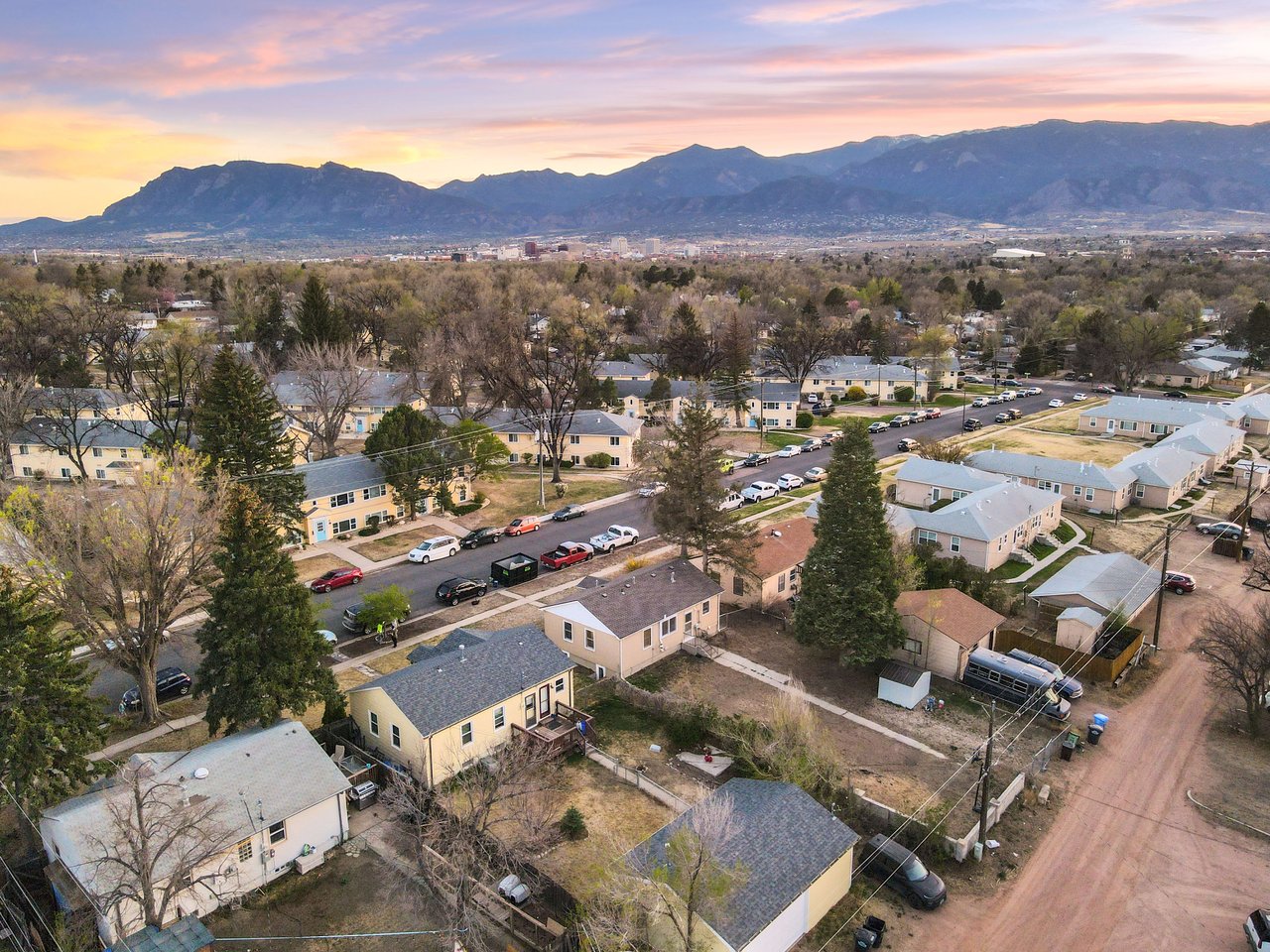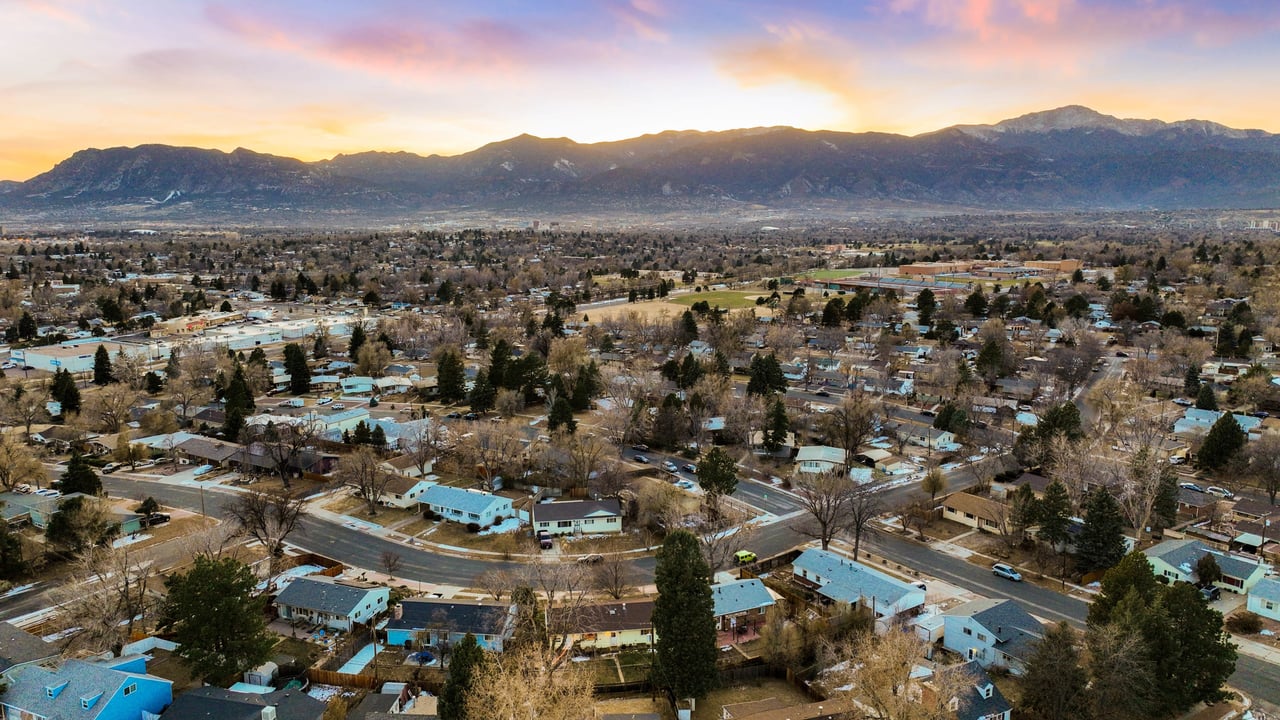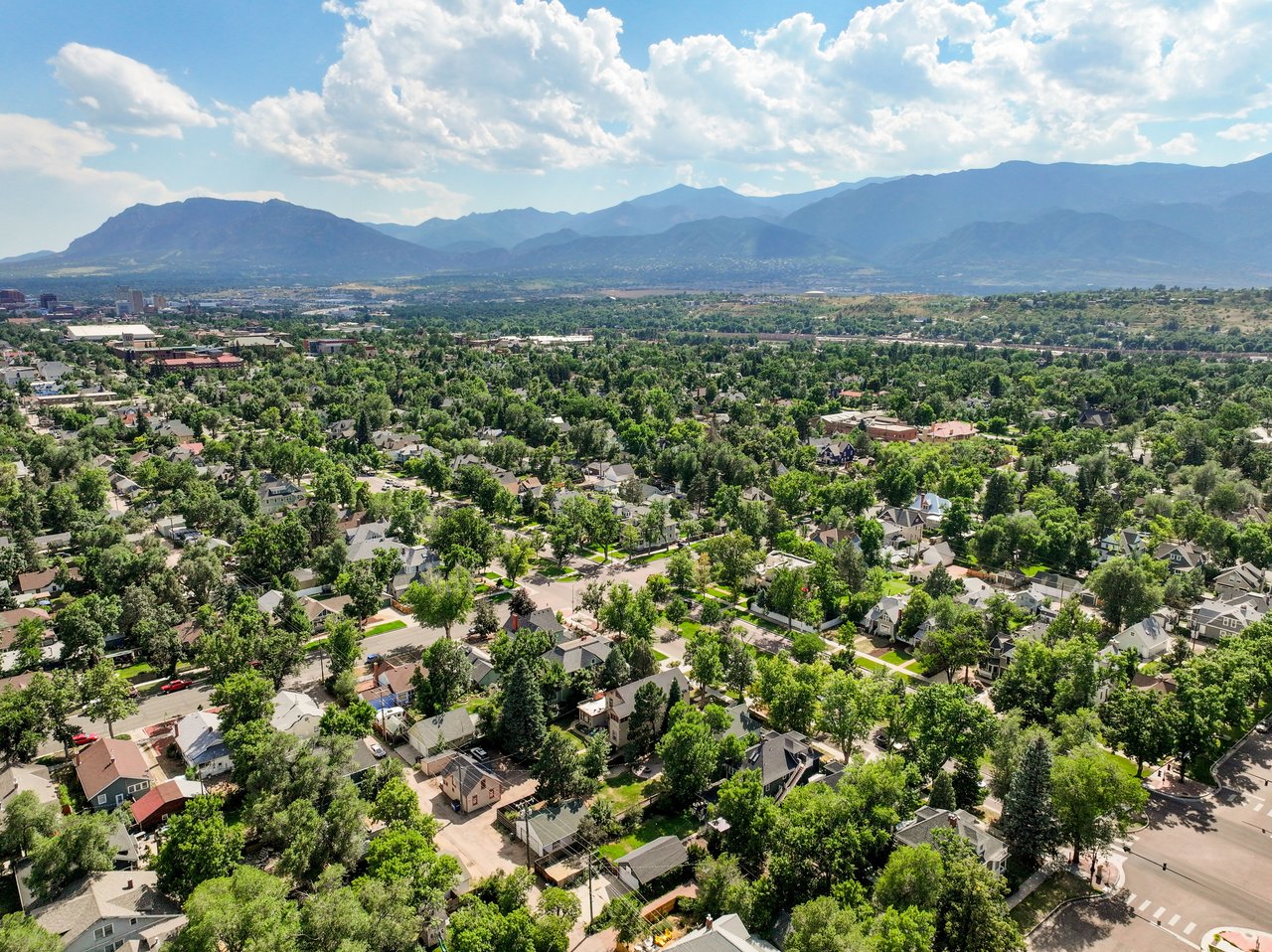
The Old North End is one of the most recognizable and best preserved historic neighborhoods in Colorado Springs. It sits in a compact pocket directly north of Colorado College, with Monument Valley Park forming its western edge, Penrose Hospital at the north end, and downtown Colorado Springs less than a mile to the south. What sets it apart is the architecture, the streetscape, and the sense that you have walked into a part of the city that has been intentionally protected for more than a century.
Most Colorado Springs neighborhoods were built outward from the city in waves of post war and modern development. The Old North End predates almost all of that. Construction began in the 1880s and accelerated rapidly between 1890 and 1910, fueled by the wealth flowing in from the Cripple Creek and Victor gold mines. That timing is why the streets feel different here. They are wider than typical residential streets, lined with mature trees, set on a regular grid, and lit at night by original style street lamps that match the era of the homes.
The neighborhood is small and tightly defined, one of the more compact residential pockets in the city. You can walk from one end to the other in about 20 minutes, bike to Colorado College in five, and reach the heart of downtown in another five. If you like the walkability but want to compare with a more urban setting, our Downtown Colorado Springs guide covers the area just to the south.
The Old North End is recognized as a historic district by both the National Register of Historic Places and History Colorado. There are actually two overlapping National Register districts within the neighborhood: the Old North End Historic District and the North Weber and Wahsatch Historic District. Together they protect one of the largest collections of preserved historic homes west of the Mississippi.
The architectural mix is the real story. Walk a single block and you might pass a Queen Anne Victorian, all turrets and wraparound porches, sitting next door to a Tudor Revival with steep gables and storybook half timbering. Across the street might be a Spanish Colonial under a red tile roof, or a low slung Craftsman bungalow with exposed rafters and a deep front porch. Colonial and Georgian Revivals fill in the rest, recognizable for their symmetry, columned entries, and brick or clapboard facades, with a handful of Modern Movement and International Style homes scattered in from the mid century. Many were designed by architects whose names still carry weight in Colorado Springs history, including Thomas MacLaren and Charles Thomas.
The interior and exterior details match the era. Stained glass, hand carved woodwork, slate and tile roofs, and deep covered front porches are common here rather than rare. A surprising number of homes still have their original sleeping porches, which were added in the early 1900s when Colorado Springs was a national destination for tuberculosis recovery.
Sizes range widely too, from compact two bedroom bungalows on smaller lots to grand Victorian and Spanish Revival estates with oversized lots and detached carriage houses. Legally permitted duplexes, cottages, and accessory units are woven throughout, giving buyers more entry points than a typical single family district. Because Old North End is a designated historic district, exterior changes generally require city review, which is part of what has kept the architectural character intact.
Monument Valley Park runs the entire western edge of the neighborhood and is one of the main reasons people choose to live here. The park stretches roughly two miles north to south along Monument Creek with eight miles of trail, two lakes, a playground, sports fields, a pool, and pickleball courts on the south end. Boddington Park, on the northern end, serves as the gathering point for neighborhood events, and the Pikes Peak Greenway trail connects through the park to a regional trail system that extends through downtown and beyond.
For golf, Patty Jewett Golf Course sits just east of the neighborhood. It opened in 1898, making it one of the oldest public courses west of the Mississippi. Shooks Run Trail, just east of Wahsatch, adds another paved corridor for biking and running.
Old North End is residential by design, but daily life happens on its edges. Good Neighbors Meeting House is the unofficial neighborhood living room, known for coffee, sandwiches, all day waffles, and a wine list. Stir is the local pick for biscuits and gravy. Leon Gessi New York Pizza pulls in a steady crowd from across the city for thin crust pies and oversized calzones. The Bonn Shopping Center sits just north and west of the neighborhood for everyday errands.
For everything else, downtown Colorado Springs is less than a mile south. That gives residents walkable or short bike access to the Lincoln Center, the Colorado Springs Fine Arts Center on the Colorado College campus, the Pioneers Museum, the Money Museum, dozens of independent restaurants and breweries, and the full retail and dining corridor along Tejon Street.
Old North End is served by Colorado Springs School District 11. The typical attendance pattern includes Steele Elementary or Jackson Elementary depending on the address, North Middle School located within the neighborhood itself, and Palmer High School on North Nevada Avenue at the southern edge. Palmer is the flagship high school of D11 and home to the oldest International Baccalaureate program in the area, which is a meaningful draw for families prioritizing academic rigor. School boundaries can shift, so confirm assignments based on your specific address.
The Old North End Neighborhood organization, known locally as ONEN, was founded in 1957 and is one of the longest running neighborhood nonprofits in Colorado Springs. ONEN is not a homeowners association. There are no mandatory dues, no design covenants enforced privately, and no shared amenities to maintain. What it does is organize the neighborhood. ONEN coordinates historic preservation efforts, communicates with the city on zoning, traffic, and safety, and runs the calendar of events that defines the neighborhood culture: the 4th of July parade, the spring Easter Egg Hunt, ONEN Fest in the fall, the annual yard sale, the garden party, and the ONEN Dog of the Year. It is a level of community engagement that most neighborhoods in Colorado Springs simply do not have.
According to U.S. Census Bureau data, Old North End is home to approximately 3,857 residents, with a median age of 49 and an average individual income of $78,797. That puts the neighborhood notably older and higher earning than Colorado Springs as a whole, where the median age sits in the mid 30s. The numbers reflect what residents have always said about the area: people move into Old North End and tend to stay. Long term ownership is common, and it is not unusual to meet neighbors who bought their homes decades ago.
Day to day, the mix is broader than the numbers suggest. Families with school age children sit alongside Colorado College faculty, retirees in their second or third home, and younger professionals drawn in by the walkability. Because the neighborhood includes legally permitted duplexes and accessory units along with the larger historic homes, there is a rental population as well, particularly closer to the Colorado College border.
Historic homes come with their own playbook. Inspections matter more, contractor relationships matter more, and pricing a home correctly means understanding what the architectural and historic value adds, not just the square footage. The Johnson Team works with buyers and sellers across Old North End and the surrounding historic districts and is happy to talk through a specific home or street if you have questions.
Where is the Old North End in Colorado Springs? The Old North End sits directly north of downtown Colorado Springs and Colorado College. Its boundaries run from Monument Valley Park on the west to Wahsatch Avenue on the east, Uintah Street on the south, and the old railroad corridor near Van Buren Street on the north.
Is Old North End a historic district? Yes. The Old North End is recognized as a historic district by both the National Register of Historic Places and History Colorado. It contains two overlapping National Register districts, the Old North End Historic District and the North Weber and Wahsatch Historic District, and is considered one of the largest preserved historic neighborhoods west of the Mississippi.
What school district is Old North End in? Old North End is served by Colorado Springs School District 11. The typical school path is Steele or Jackson Elementary, North Middle School located inside the neighborhood, and Palmer High School at the southern edge. Palmer is the flagship D11 high school and home to the oldest International Baccalaureate program in the region.
What kinds of homes are in Old North End? Homes range from Queen Anne and Victorian originals built in the late 1800s to Tudor, Colonial Revival, Georgian Revival, Mission, Spanish Colonial Revival, Craftsman, and mid century styles. Most were built between 1885 and 1965. Sizes range from two bedroom bungalows to large multi story estates on oversized lots, and a number of legally permitted duplexes and cottages exist within the neighborhood as well.
Is Old North End a good place to live? Old North End is a strong fit for buyers who want walkability, historic architecture, and a tight knit community within walking distance of downtown Colorado Springs and Colorado College. Residents are typically drawn to the active ONEN community, the access to Monument Valley Park, and the architectural character that newer parts of the city cannot replicate. Owning a historic home does require approval from the city for exterior changes and tends to come with higher maintenance than a newer build.
3,857 people live in Old North End , where the median age is 49 and the average individual income is $78,797. Data provided by the U.S. Census Bureau.
Total Population
Median Age
Population Density Population Density This is the number of people per square mile in a neighborhood.
Average individual Income
Old North End has 1,798 households, with an average household size of 2. Data provided by the U.S. Census Bureau. Here’s what the people living in Old North End do for work — and how long it takes them to get there. Data provided by the U.S. Census Bureau. 3,857 people call Old North End home. The population density is 7,688.35 and the largest age group is Data provided by the U.S. Census Bureau.
Total Population
Population Density Population Density This is the number of people per square mile in a neighborhood.
Median Age
Men vs Women
Population by Age Group
0-9 Years
10-17 Years
18-24 Years
25-64 Years
65-74 Years
75+ Years
Education Level
Total Households
Average Household Size
Average individual Income
Households with Children
With Children:
Without Children:
Marital Status
Blue vs White Collar Workers
Blue Collar:
White Collar: