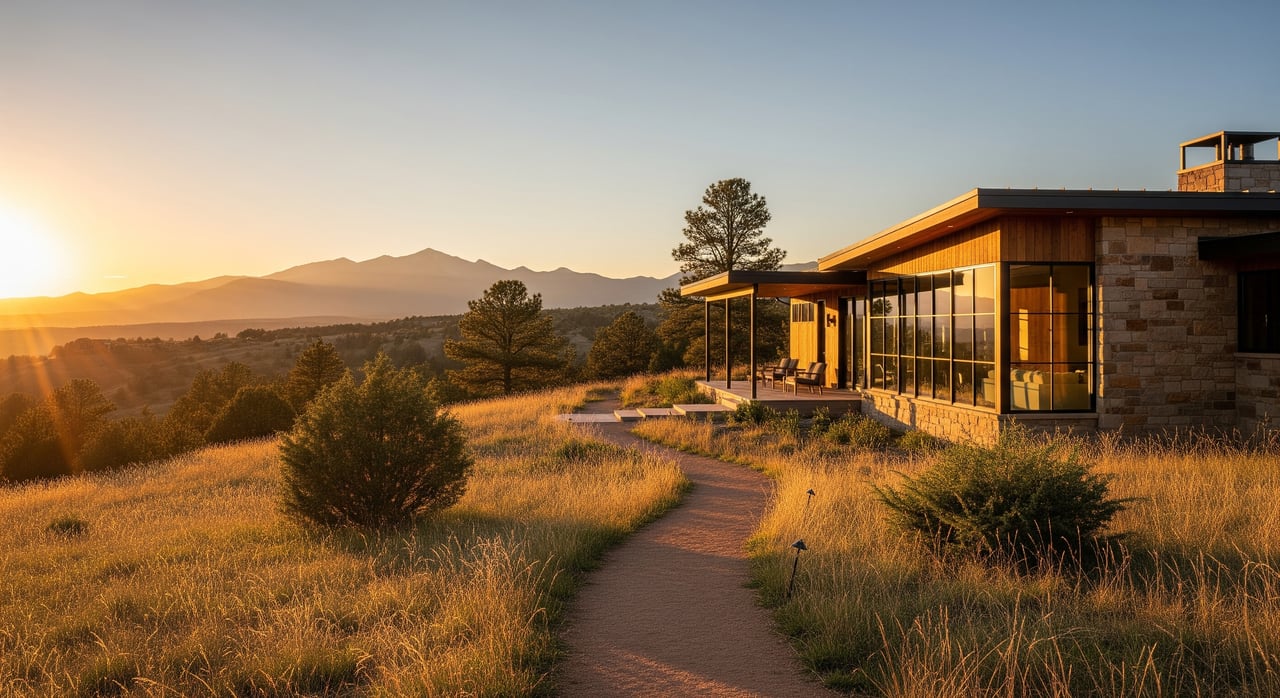
Want to step out your front door and be on a trail in minutes, then hop onto I-25 for a smooth commute? If you are looking at homes in Northgate or Monument, you can line up daily trail access with daily life. You want clear guidance on where the local Santa Fe trail corridor runs, how close is close, and which neighborhoods make everyday walking and biking easy. This guide gives you simple, local criteria to compare homes and make a smart move. Let’s dive in.
What “Santa Fe Trail” means here
In the Monument and Northgate area, “Santa Fe Trail” can describe two different things. One is the 19th-century Santa Fe National Historic Trail. The other is a local multi-use recreational corridor that uses the Santa Fe name. When you shop for homes, confirm the official local trail name, who manages it, and whether it is paved or natural surface.
You can verify details with the Town of Monument Parks, Recreation & Open Space, El Paso County Parks & Open Space, and the Tri-Lakes Trails & Open Space Coalition. National trail databases like TrailLink and AllTrails can help cross-check surface type and trailheads. Use official municipal or county maps when you need precise alignment and access points.
How close is close: access bands
To compare homes, use simple distance bands.
- 0.25 mile: about a 5 to 6 minute walk on flat ground. This is strong daily walking access.
- 0.5 mile: about a 3 minute bike ride at an easy pace. This is quick access for errands.
- 1.0 mile: about a 6 to 8 minute bike ride. This is routine bike errand range.
Homes within 0.25 mile of a trail corridor or trailhead with sidewalks or short off-street connectors provide direct path access. Within 0.5 to 1.0 mile, you can reach the trail for bikeable errands and short rides to coffee, grocery, or school, depending on your route options.
Where residents typically connect
Trailheads and pocket parks
Focus on named trailheads, pocket parks, and short connectors into the corridor. Start with municipal and county trail maps to find official trailheads. Cross-check with TrailLink or AllTrails for user-reported surface types and parking notes, then verify on satellite imagery.
When you visit, look for these features:
- Surface type: paved, compacted gravel, or singletrack.
- Amenities: parking, bike racks, restrooms, and clear signage.
- Direct connections: sidewalks, underpasses, and multi-use spurs that feed the trail.
- Barriers: busy road crossings, gaps in sidewalks, steep grades, and areas without lighting.
Common connectors and barriers
Your everyday route matters as much as distance. A short, well-marked crossing with curb ramps can save time and increase safety. Look for wayfinding signs and mileage markers that help with planning. Note where private fences limit access and where a simple cut-through or pocket park creates a faster path.
Neighborhood snapshots in Northgate and Monument
Use these as starting points to compare homes. Neighborhood boundaries vary by HOA and MLS, so verify specifics with official maps.
Central Monument near Second Street and Old Denver Highway
The research highlights central Monument near the Second Street and Old Denver Highway corridor as a strong area to investigate for municipal parks, pocket parks, and possible short connectors into the trail system. This area is a candidate for direct path access, subject to block-by-block verification.
Northgate neighborhoods along the I-25 corridor
Northgate sits next to I-25 with commercial frontage and mixed-use pockets. It is a candidate for quick I-25 access and potential trail connections where multi-use easements exist. Confirm exact routes using county or town maps and on-the-ground checks for crossings and sidewalk continuity.
Jackson Creek and Jackson Creek North
These master-planned areas east and south of central Monument often include internal sidewalks and possible paved connectors. They are good candidates to assess for bikeable errands and short rides to daily destinations. Verify each connector, especially where a neighborhood meets a larger trail corridor.
Woodmoor and Palmer Lake adjacency
Woodmoor has its own internal trail network and small parks. Distances to the Santa Fe corridor vary. If you like a quieter, internal trail system with a short drive to I-25, compare specific addresses to the 0.25, 0.5, and 1.0 mile bands and note any high-traffic crossings along your preferred route.
Bikeable errands from the trail
Your trail can be more than recreation. It can be part of your everyday errands.
- Define your points of interest: grocery, coffee, pharmacy, post office, schools, and transit stops.
- Use low-stress bike routes: multi-use paths, bike lanes, or quiet streets.
- Target a 10-minute bike radius: most riders can cover 1.0 to 1.5 miles comfortably with short stops.
A simple process works well. Map your home to the trail, then map the trail to your top two destinations. If both legs use low-traffic streets or multi-use paths, you have a practical errand loop.
I-25 commute check
If the commute matters, define “near I-25” as a less than 5 minute drive to the nearest on-ramp outside peak congestion. Use a collector road that feeds I-25 without multiple left turns or school zone delays. Check typical AM and PM times with a live map during your actual travel window.
In Northgate and Monument, neighborhoods near direct connectors to I-25 ramps are likely to provide the most predictable commute times. Confirm drive times from your block to the exact ramp you will use.
A simple 3-step house-hunting plan
Map your access band. Place the trail corridor on your map and draw 0.25, 0.5, and 1.0 mile rings around each candidate home. Prioritize homes that fall within your preferred band.
Test the errand loop. Ride or drive your route to two daily destinations. Look for protected crossings, bike racks, and lighting. Note any gaps in sidewalks.
Time the commute. Drive to your I-25 on-ramp at your normal departure time. Repeat for two days to confirm consistency.
What to look for at a trailhead
To make everyday use easy, prioritize:
- Clear, short connectors from your street to the trail.
- Signage and wayfinding to nearby parks or commercial areas.
- Bike racks and restrooms at common start points.
- Pocket parks with shade and seating for quick breaks.
How we help you compare homes
You deserve a clear, low-stress path to the right home. Our team specializes in neighborhood-level detail across Monument, Northgate, and the north end of Colorado Springs. We can help you verify trailheads, measure realistic access times, and compare commute options block by block.
As a team, we move fast with 24/7 lead response, remote video tours for out-of-town buyers, and productized options for sellers who need certainty. If you plan to sell first, ask about our Instant Offer, Guaranteed Sale, or Home Swap pathways to protect your timeline while you shop.
Ready to align trail access with your lifestyle and commute? Reach out to The Johnson Team for local guidance and a plan that fits your goals.
FAQs
What is the “Santa Fe Trail” near Monument and Northgate?
- In this area, the name can refer to a local multi-use recreational corridor that borrows the Santa Fe name or the historic Santa Fe National Historic Trail, so confirm the official local trail name and surface before you buy.
Which Monument neighborhoods should I check for daily trail access?
- Start with central Monument near Second Street and Old Denver Highway, then compare Northgate, Jackson Creek, and Woodmoor using 0.25, 0.5, and 1.0 mile distance bands and on-the-ground route checks.
How far is a five-minute walk when evaluating a home?
- About 0.25 mile on flat ground is a typical 5 to 6 minute walk, which is a practical threshold for frequent trail use.
Can I use the trail for bikeable errands in Northgate or Monument?
- Yes, if your home is within 0.5 to 1.0 mile of the corridor and your route uses low-stress paths or quiet streets to reach places like coffee, grocery, or the post office.
How do I check I-25 commute convenience from a specific block?
- Time the drive from your driveway to the nearest I-25 on-ramp during your normal commute and look for direct collector roads that avoid multiple left turns or school zone slowdowns.
What should I look for at a trailhead when touring homes?
- Verify parking, signage, bike racks, restrooms, and safe crossings, and confirm whether connectors are paved or compacted gravel to match your daily routine.